

Blue whale coloring pages offer a fun and creative way to learn about one of the largest animals on Earth. These coloring pages allow people of all ages to explore the shape and features of blue whales through art.
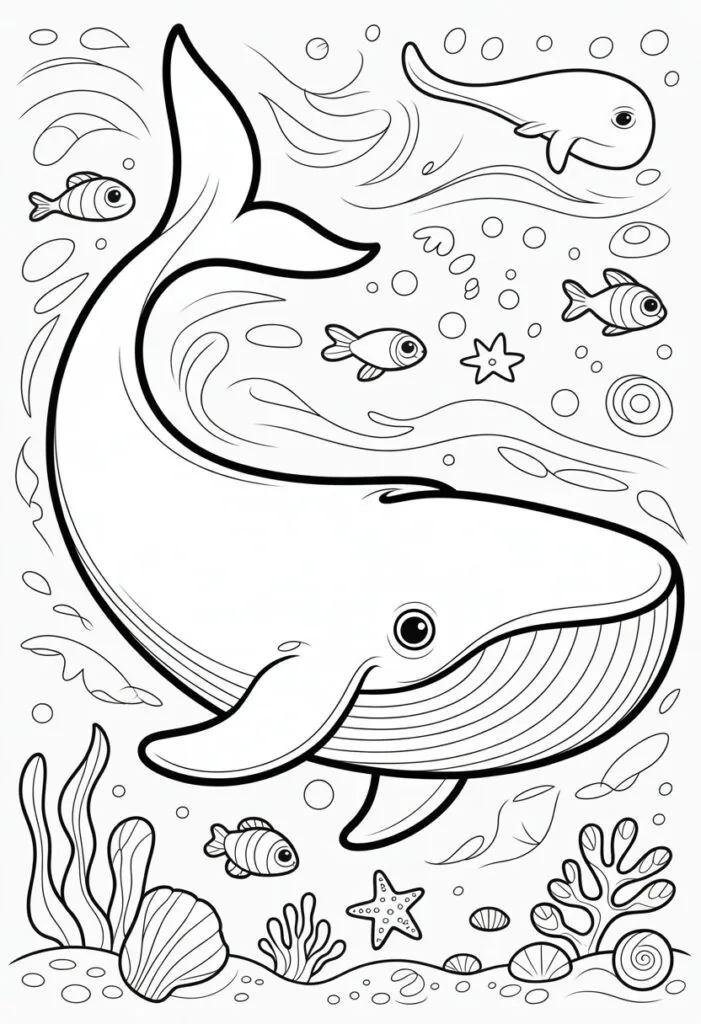
They provide a simple and engaging activity that combines creativity with education about marine life. Coloring pages like these can be used at home, in schools, or as part of ocean-themed projects.
1) Realistic blue whale breaching the surface coloring page
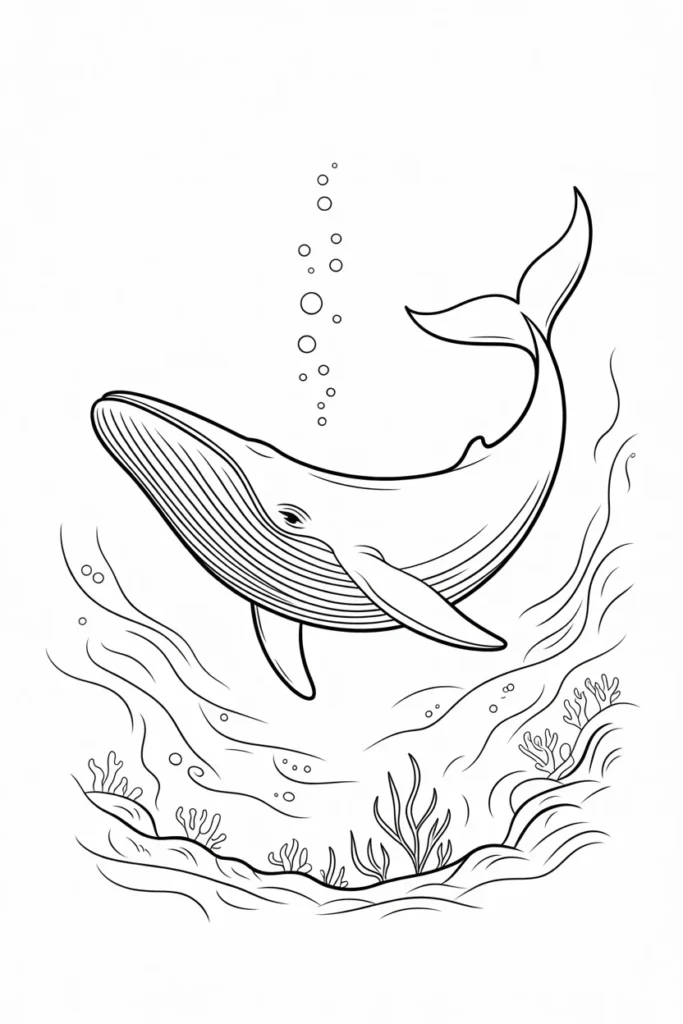
This coloring page shows a blue whale jumping partly out of the ocean. It captures details like the whale’s shape and the water splashing around it.
The coloring page uses shades of blue and gray to create a lifelike look. It helps colorers understand the whale’s texture and natural colors.
This image suits those who enjoy nature and want a more accurate whale picture. It can be used by kids and adults for both fun and learning.
2) Blue whale swimming with calf illustration
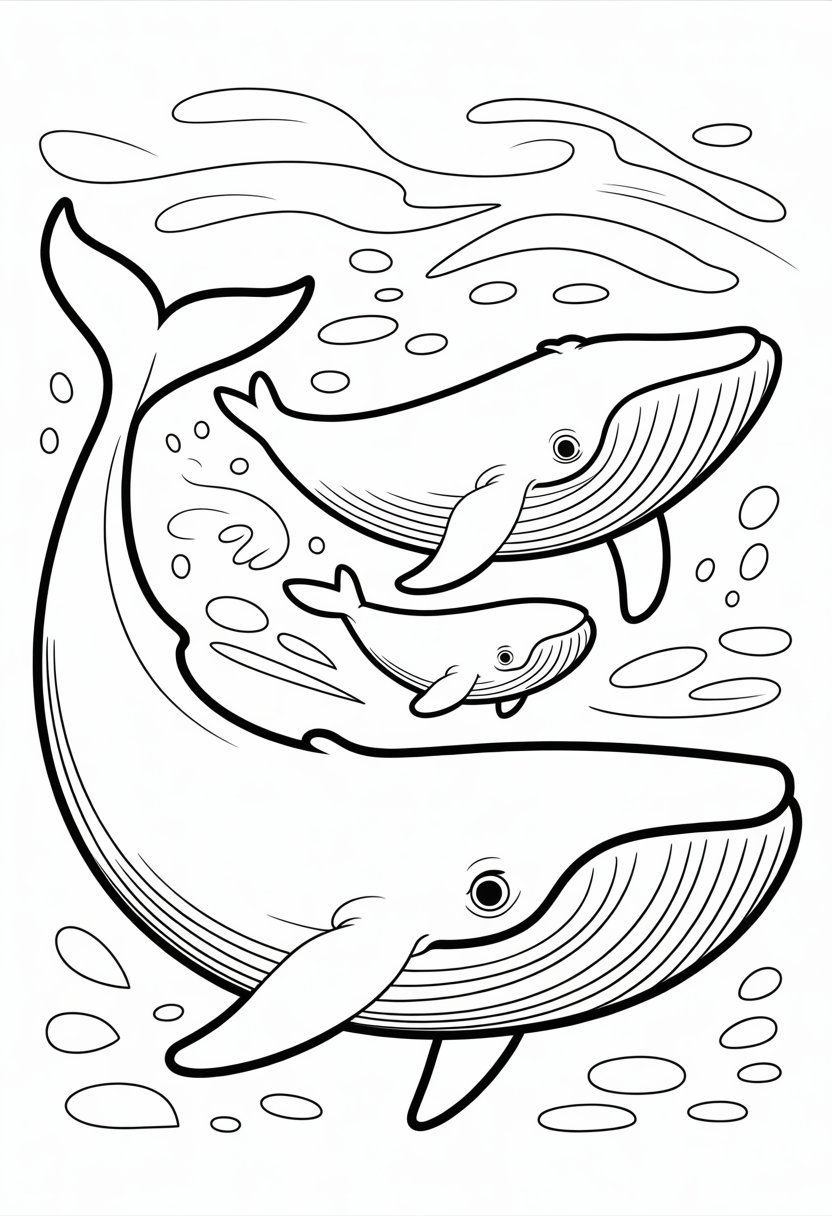
The blue whale swimming with its calf is a popular subject in coloring pages. It shows the bond between mother and baby in the ocean.
These illustrations often feature the two whales moving side by side. The calf is smaller and close to the mother for safety.
It also highlights the gentle nature of blue whales in the wild.
3) Cartoon-style blue whale with ocean background
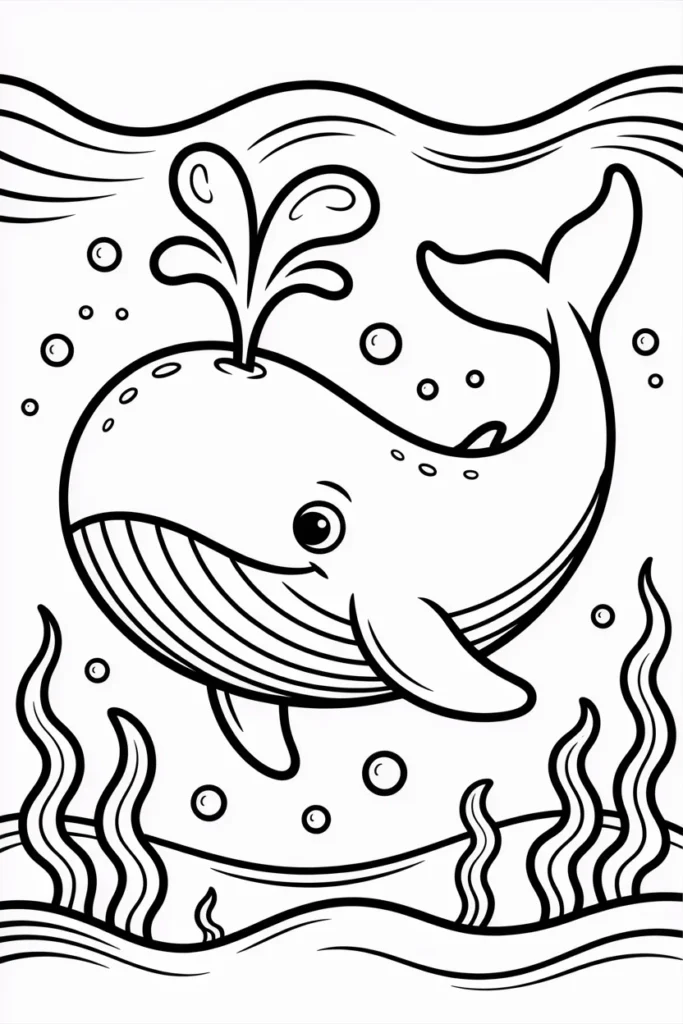
This coloring page shows a cartoon blue whale swimming happily in the ocean. The whale often has simple, bold outlines.
The background usually includes ocean elements like waves, seaweed, or small fish. These details make the scene more lively.
Such pages are great for young children. They help kids practice coloring skills while learning about the ocean.
The whale may be shown smiling or playing, creating a friendly and inviting image. These designs are easy and fun to color.
Draw different cozy + sea activities of whale images in the article.
4) Detailed blue whale anatomy coloring sheet
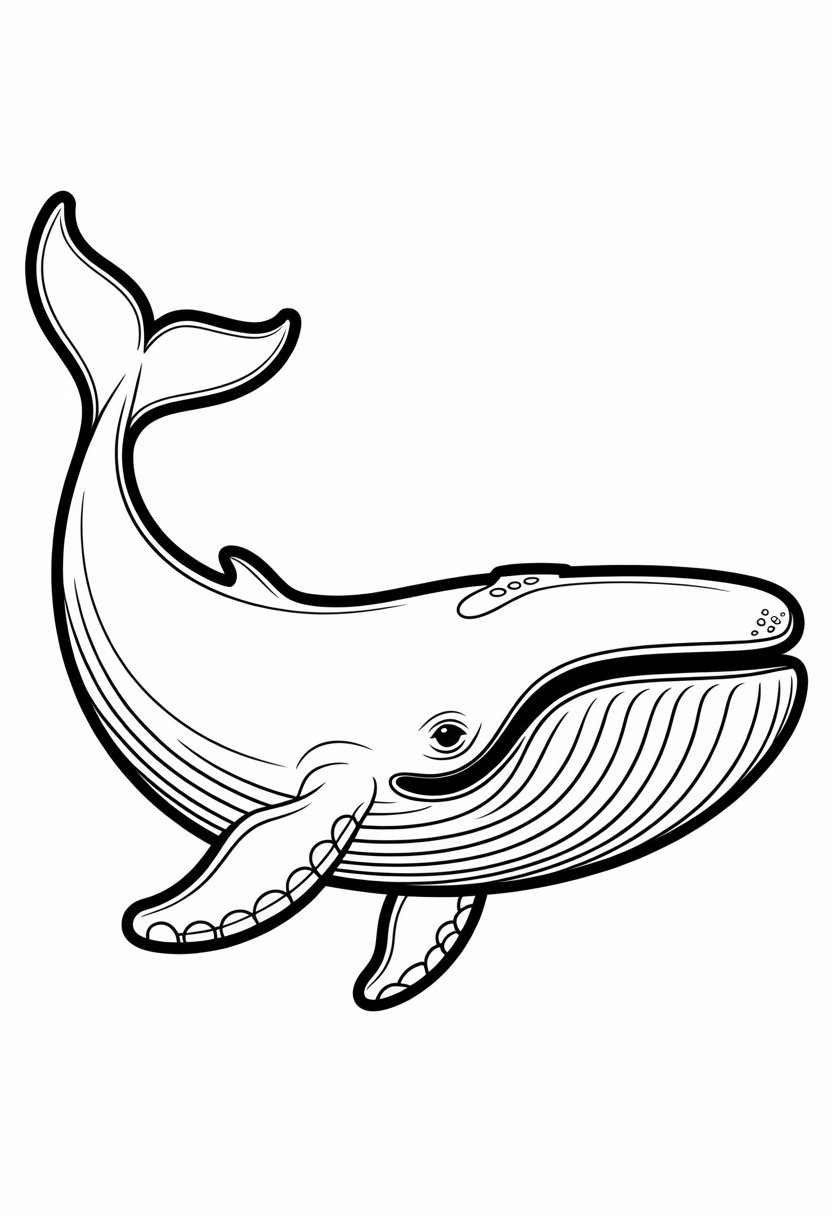
This coloring sheet shows the blue whale’s body parts clearly. It highlights features like the fins, flippers, blowhole, and tail.
The coloring page helps learners understand the whale’s size and shape.
Coloring these details can improve hand-eye coordination and focus. It also offers a relaxing activity while teaching about marine life.
5) Blue whale diving deep into the ocean scene
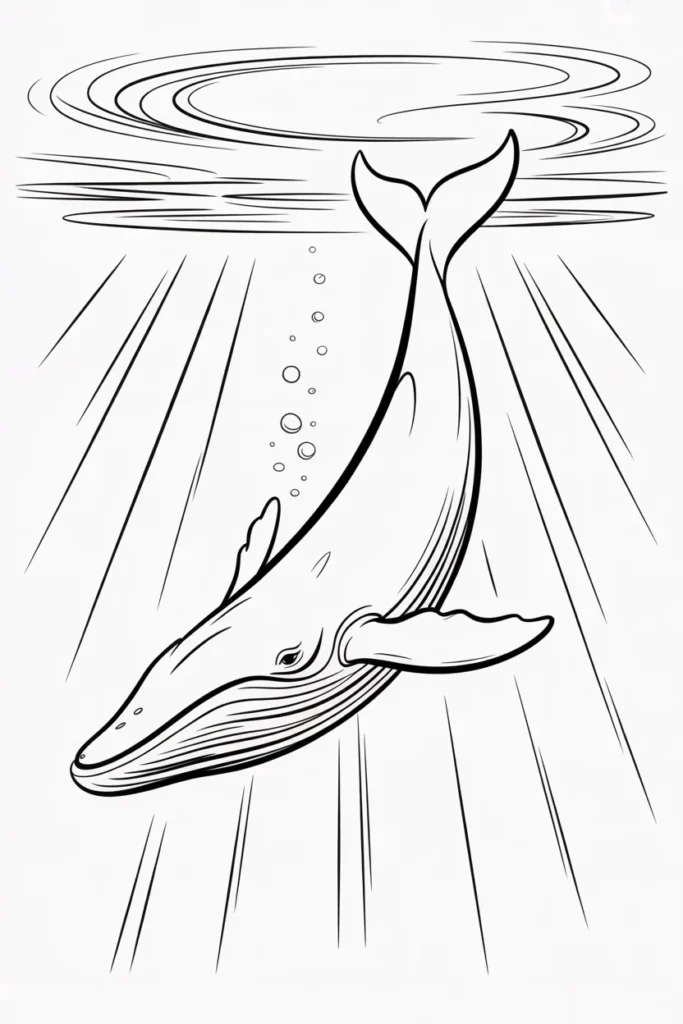
This coloring page shows a blue whale diving deep into the ocean. It captures the whale’s large size and graceful movement underwater.
The scene includes gentle waves and rays of sunlight filtering through the water. These details help bring the ocean environment to life.
Coloring this page lets people explore the quiet, vast world where blue whales live. It also encourages learning about their behavior beneath the sea surface.
Draw different cozy and sea activities of whale images in the article.
6) Cute blue whale blowing water spray
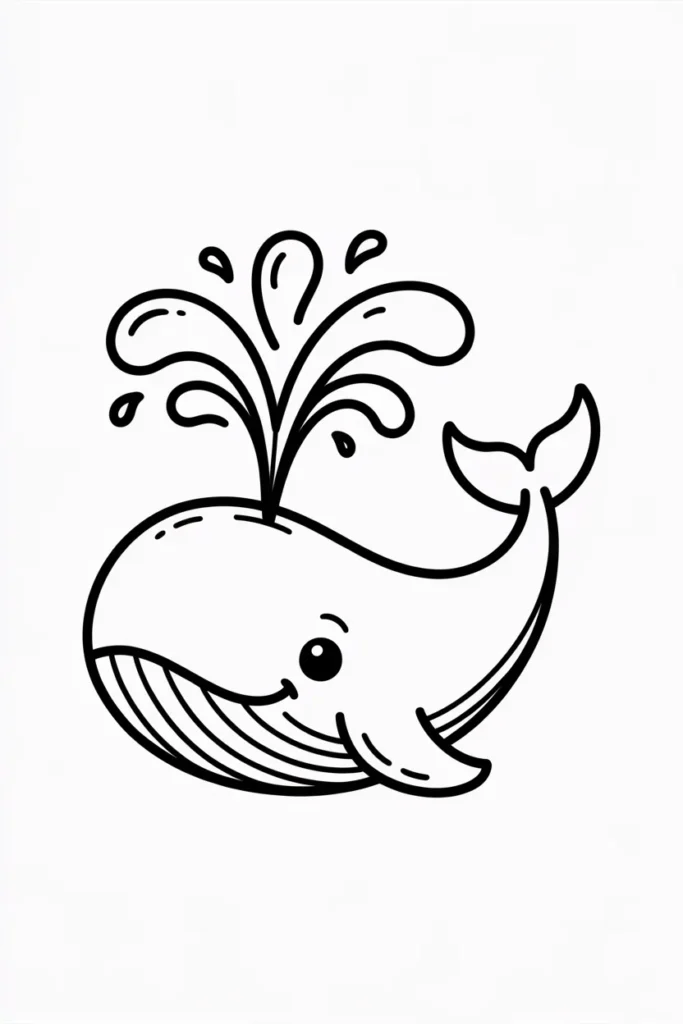
This coloring page shows a blue whale happily blowing water from its blowhole. The spray adds a lively touch to the image.
The whale has open space around it, making it easy for kids to color and add their own background ideas. They can use blues for water and light grays for the whale.
This simple design works well for young children, helping them enjoy coloring while learning about this gentle giant of the ocean. It’s a friendly and fun way to explore whale images.
7) Blue whale with coral reef and sea creatures
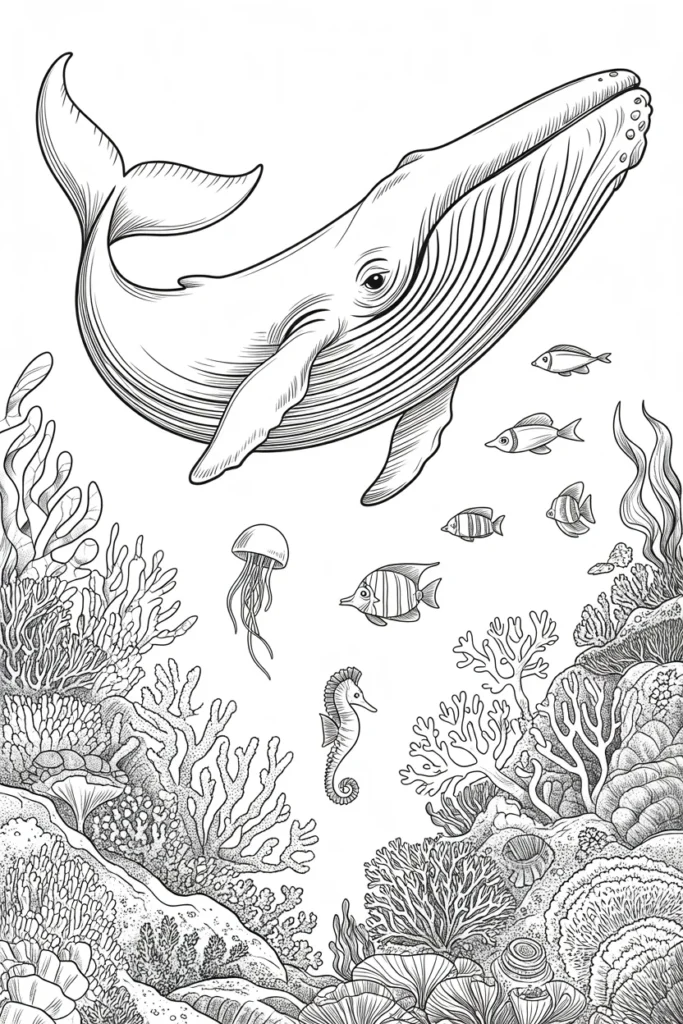
The reef is full of different sea creatures like fish and plants.
The blue whale moves slowly and gracefully through the water. The coral reef adds details that make the scene lively and interesting.
Children can enjoy coloring the whale and all the small animals around it. The bubbles and sunlight make the picture feel calm and natural.
8) Giant blue whale next to smaller whale species
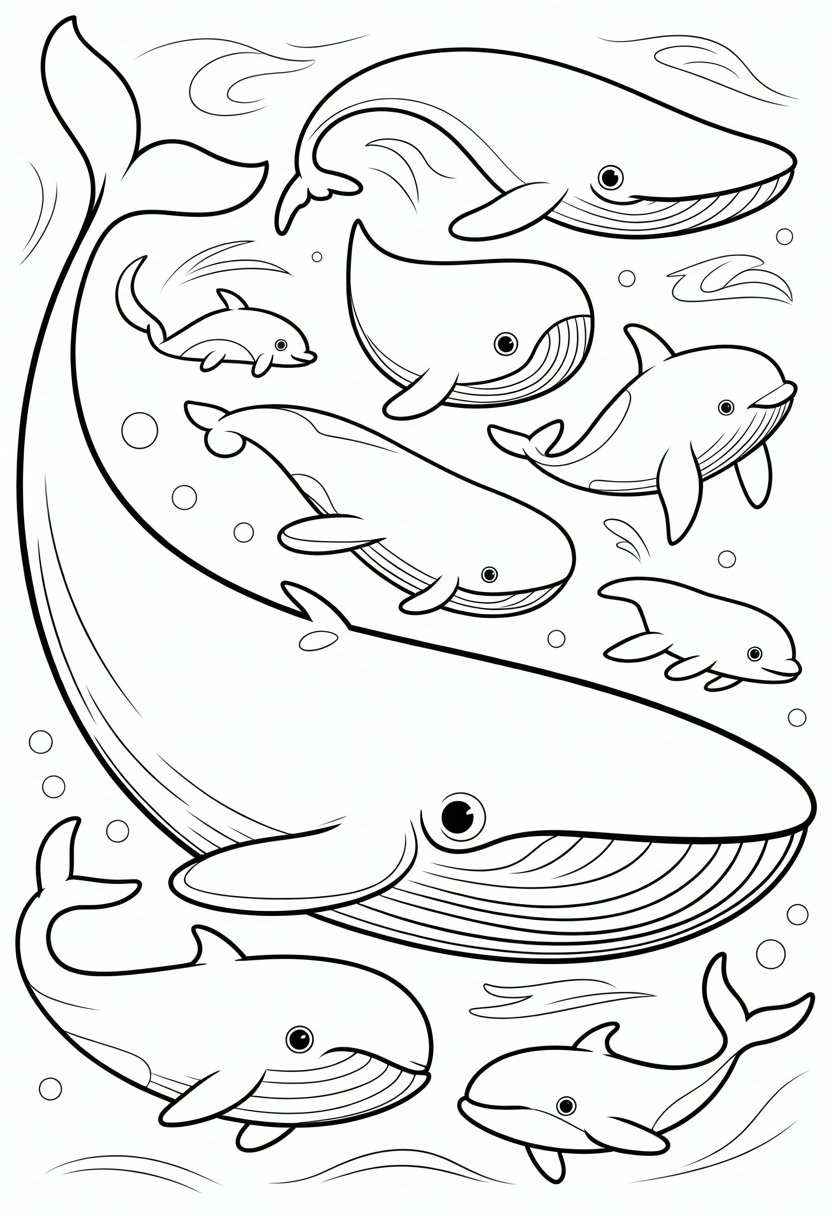
The blue whale is the largest animal on Earth. It can grow up to 30 meters long.
In coloring pages, the blue whale often appears beside smaller whales. This helps show the size difference clearly.
Smaller species might include dolphins, humpbacks, or orcas. These comparisons help children understand whale sizes better.
They may show whales swimming or resting near each other.
Different cozy and sea activities can be drawn, like whales breaching or playing with sea plants.
9) Blue whale splash and waves printable
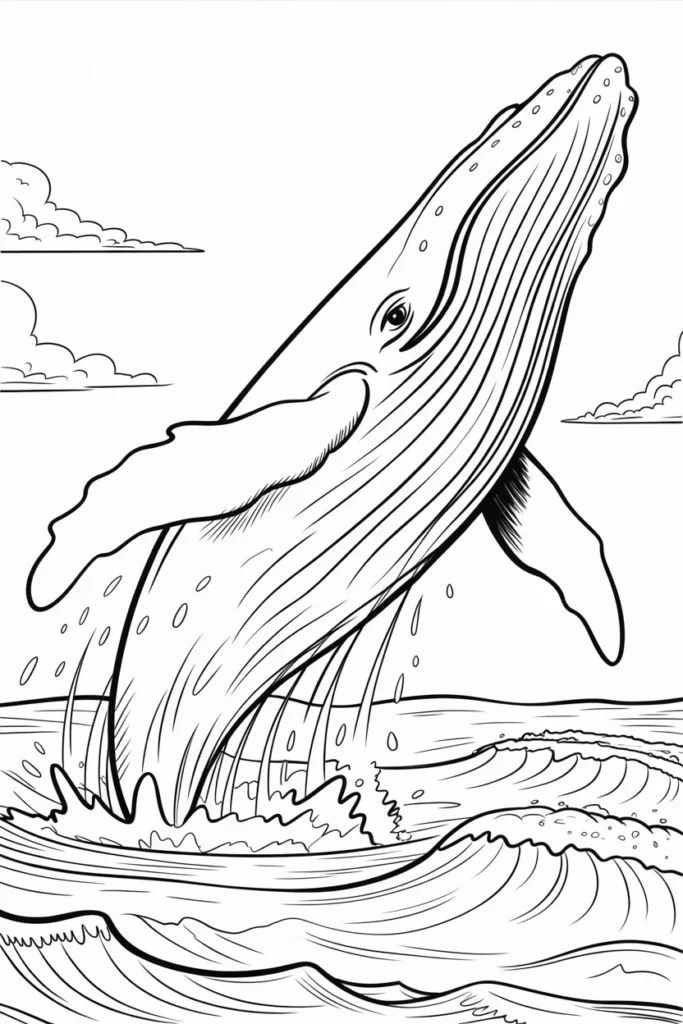
This coloring page shows a blue whale splashing in the ocean. The waves around the whale give a lively, moving feel. It helps kids see how big and strong these animals are.
The open space for waves allows children to add their own sea creatures or plants. This encourages creativity while learning about the whale’s environment. The image combines fun with a simple way to explore marine life.
This printable is easy to download and print. It suits different ages and skill levels, making it a flexible choice for classrooms or home activities. Coloring splash and waves can also teach kids about water motion and ocean scenes.
10) Abstract blue whale with geometric patterns
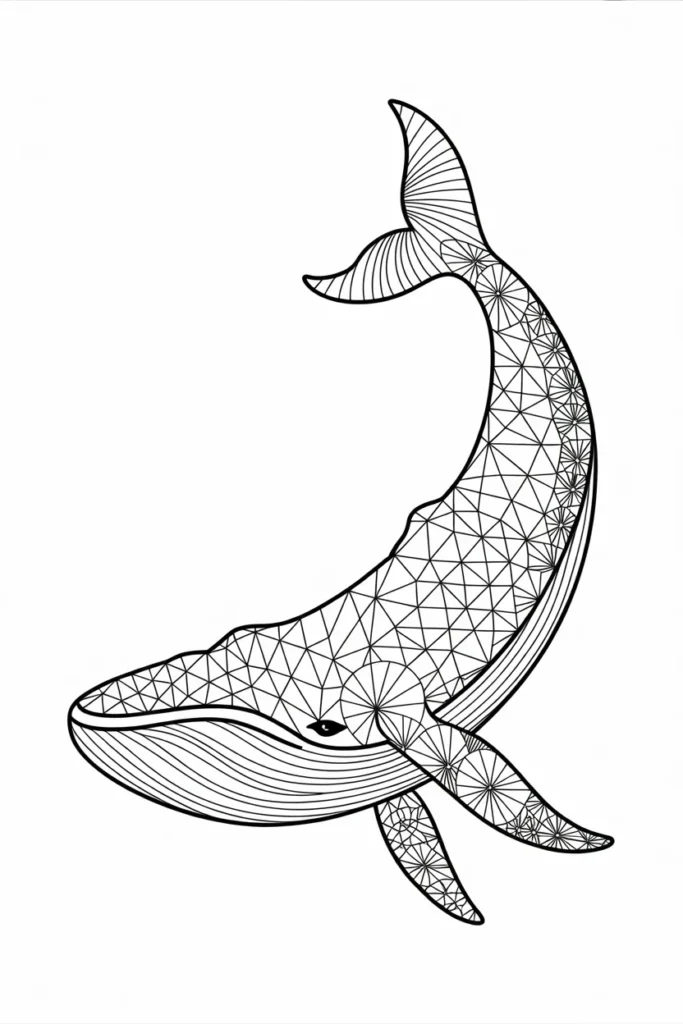
This coloring page features a blue whale designed with clean geometric shapes. The patterns add a modern and artistic style to the whale.
It allows colorers to explore different shapes while filling in the whale. The contrast between the natural form and the abstract geometry is visually interesting.
This design is suitable for both kids and adults. It helps develop fine motor skills and encourages creativity through pattern coloring.
Draw different cozy and sea activities of whale images in the article.
Fun Facts About Blue Whales
Blue whales are the largest animals on Earth. They live in oceans around the world and have special features that help them survive in their underwater environment. Their size and unique body traits make them fascinating creatures to learn about.
Blue Whale Size and Habitat
Blue whales can grow up to 30 meters (about 98 feet) long. They can weigh as much as 200 tons, which is the same as about 40 elephants combined. Their huge size helps them move smoothly through deep ocean waters.
They are found in all the world’s oceans, from the cold Arctic and Antarctic waters to warmer seas. Blue whales usually migrate long distances to eat and breed. They mostly eat tiny shrimp-like animals called krill, which they filter from the water using their baleen plates.
Unique Features of Blue Whales
Blue whales have a broad, U-shaped head, making their shape different from other whales. Along their throat are grooves, called ventral pleats, which expand when they feed. These grooves let their throat stretch to hold large amounts of water and food.
They also produce powerful low-frequency sounds. These calls can travel long distances underwater, helping them communicate and find mates. Their skin is often bluish-grey with lighter spots, which can be fun to color in detailed pages.
Tips for Blue Whale Coloring Pages
Coloring blue whale pages can be both fun and educational.
Choosing the Right Colors
The blue whale’s body is usually shown in shades of blue and gray. Using different blues, such as navy, sky blue, and teal, helps create depth and realism. Light gray can be used for highlights or the whale’s underbelly.
Shading the edges darker and leaving the center lighter can make the whale look round and strong. Using a white or very light blue pencil adds texture to the skin.
For eyes and fins, using darker tones like deep blue or charcoal gives contrast. Avoid using too many bright, unnatural colors, which can make the whale look less realistic.
Creative Background Ideas
Shades of light blue or turquoise for water work well, with some white streaks for sunlight filtering through.
Including sea plants, bubbles, or small fish around the whale adds interest without cluttering the page. Drawing soft sand or ocean floor with beige or light brown tones grounds the scene.
Waves or water splashes can be added around the whale’s tail or fins using white or pale blue highlights. This helps show movement and makes the picture more dynamic.


