
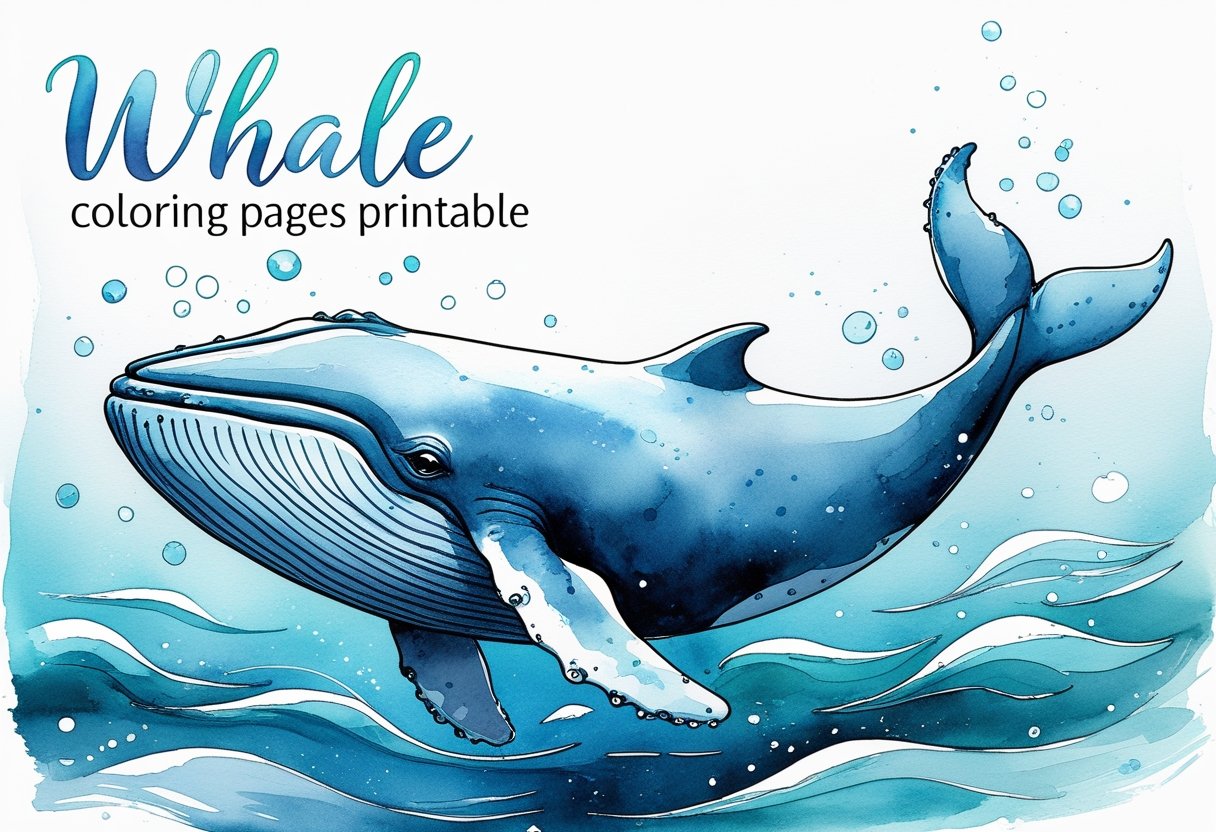
Whale coloring pages offer a simple and engaging way for people of all ages to explore the beauty of these large sea mammals. They provide an opportunity to learn about different types of whales while enjoying a creative activity. Coloring pages can focus on various whale species and their unique shapes, sizes, and features.
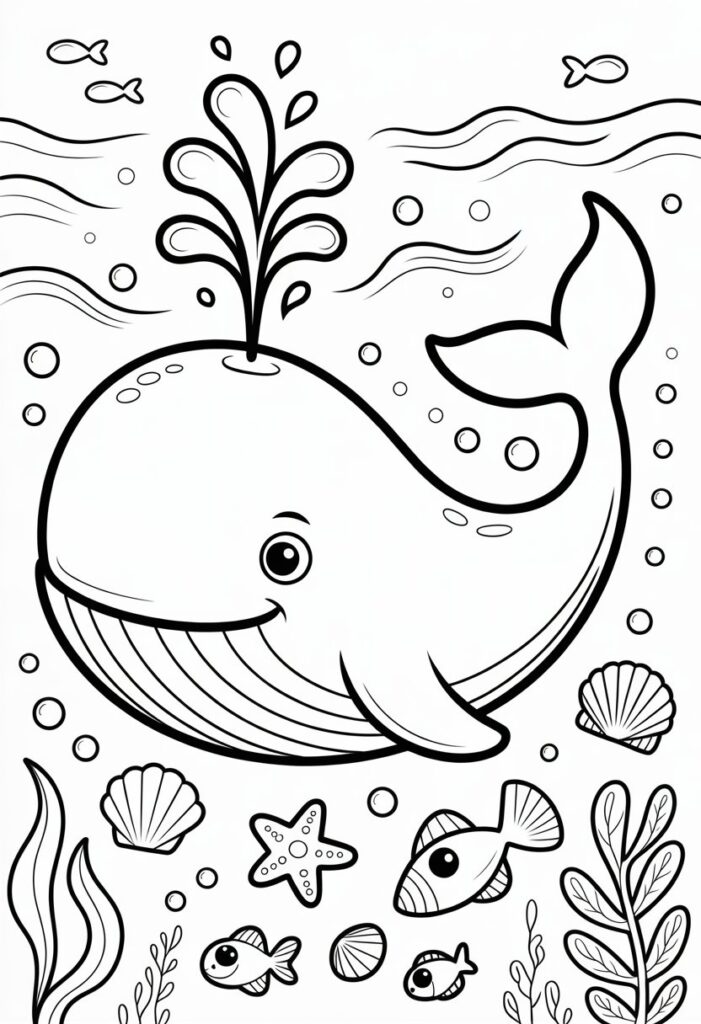
These pages serve as both an educational tool and a fun pastime for children and adults alike, helping to build knowledge about whales while encouraging artistic expression. They are widely available in printable formats, making it easy to access and use them for learning or leisure.
1) Humpback Whale Coloring Page
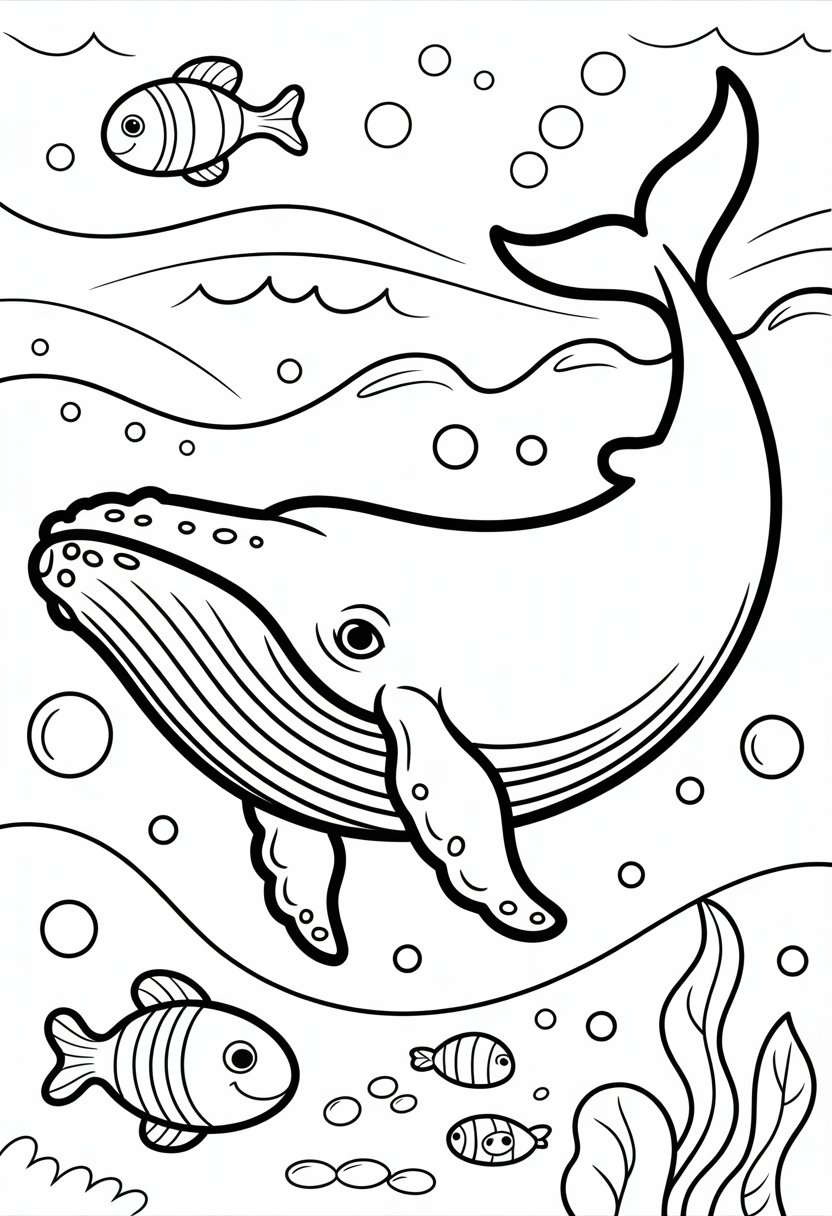
Humpback whale coloring pages show detailed images of this large marine animal.
These pages are designed for all ages and skill levels. They help improve focus and motor skills while offering a chance to learn about whales.
Many coloring pages provide realistic or playful views of humpback whales. They come in printable formats for easy use at home or school.
2) Blue Whale Coloring Sheet
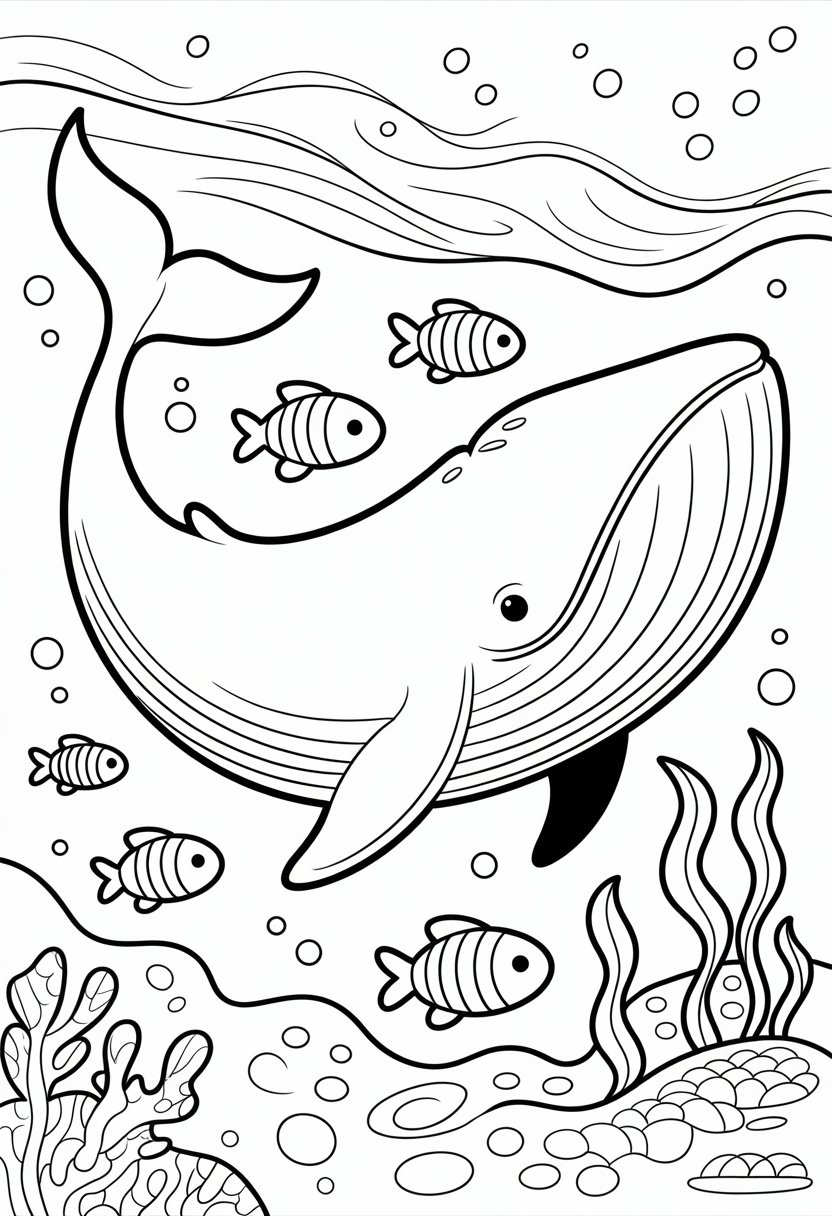
It can reach lengths of up to 30 meters and weigh about 200 tons.
Coloring sheets of blue whales often show them swimming, breaching, or caring for their calves. These images help kids learn about this giant sea creature.
Many blue whale coloring pages are free to download and print. They are suitable for both children and adults who enjoy ocean themes.
3) Orca (Killer Whale) Coloring Printable
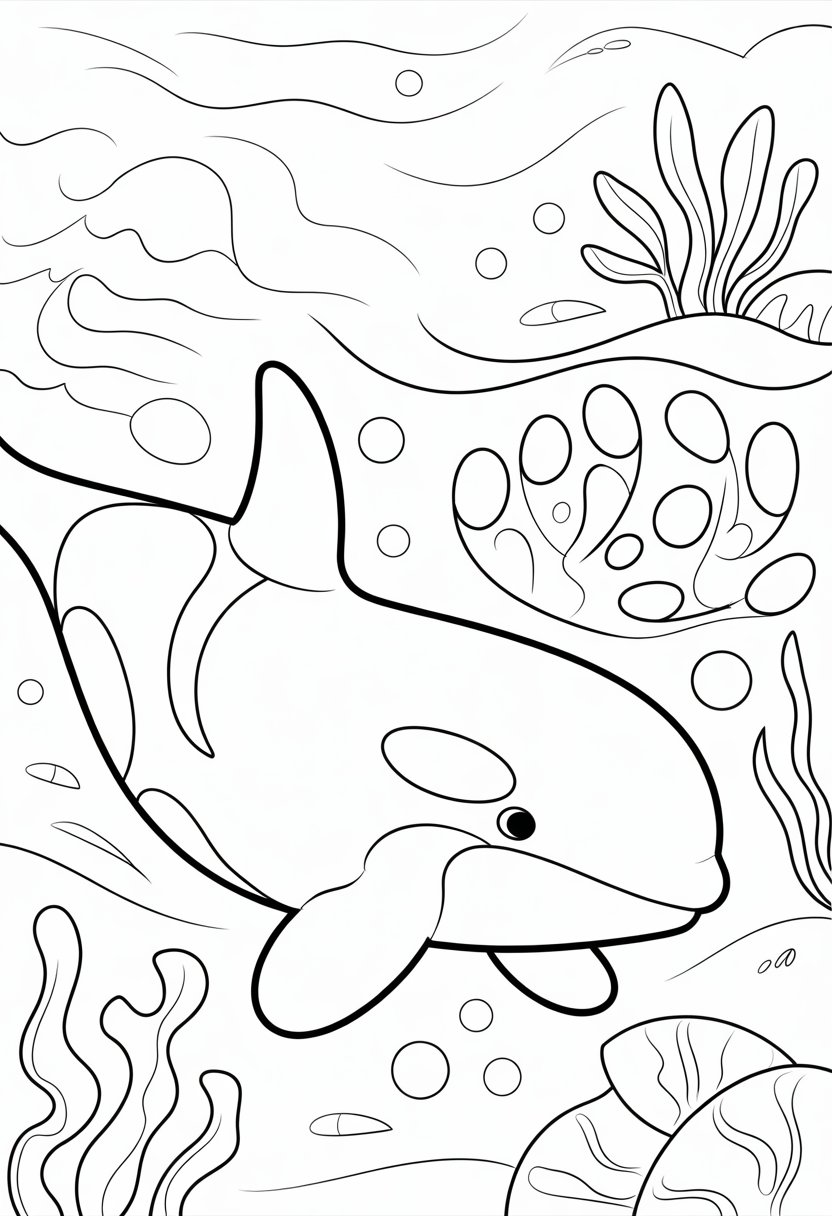
Orca coloring pages show the black and white patterns of killer whales. These pages help users learn about orcas’ unique looks.
The images often include orcas swimming, breaching, or moving with their pods. They offer simple lines for easy coloring.
Printable orca sheets are available for free. They suit kids and adults who enjoy marine animals.
4) Sperm Whale Coloring Design
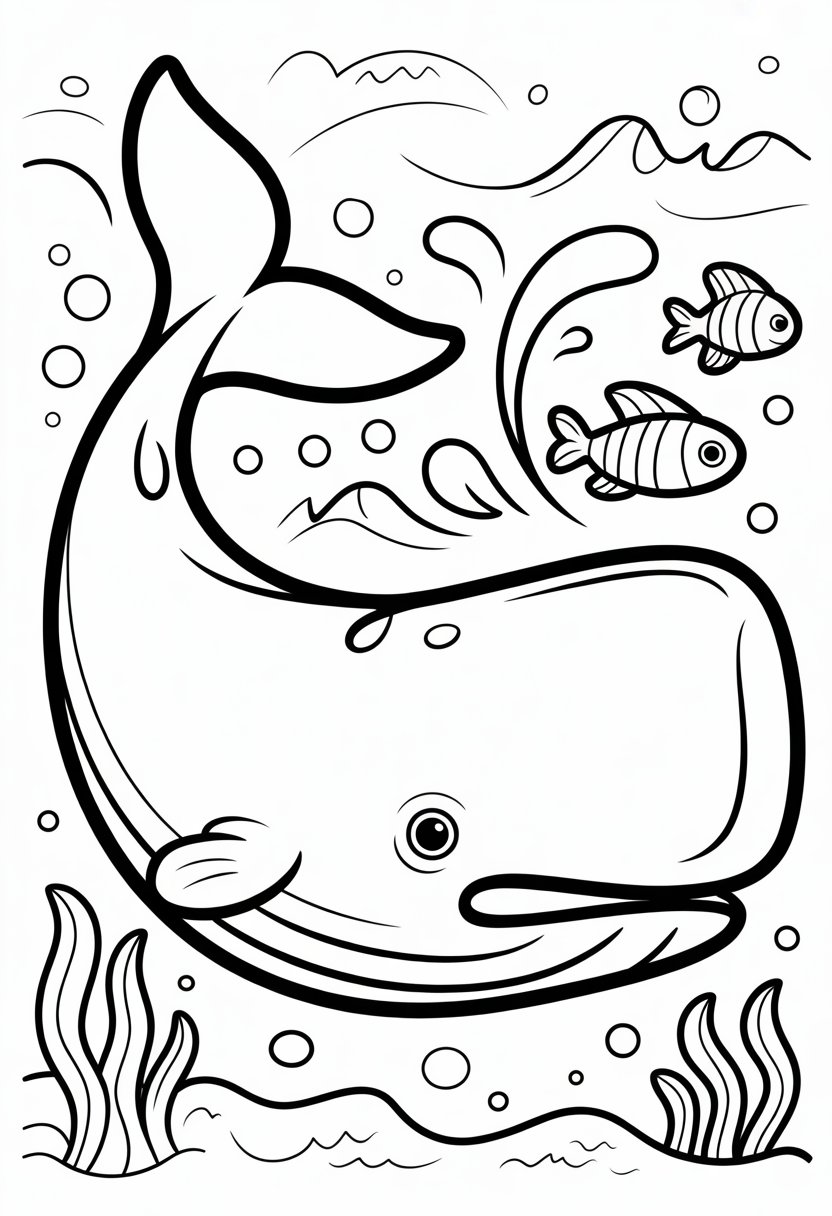
Sperm whale coloring pages often show the whale with its large head and unique shape. These designs help children learn about this deep-sea animal.
Many pages feature the whale swimming underwater. This setting shows its natural habitat clearly.
The designs range from simple outlines to detailed drawings. They suit various skill levels, from beginners to more experienced colorers.
Printable sperm whale coloring pages are widely available online. People can easily download and print them for free.
These pages provide educational value. They combine fun with learning about marine life and the environment.
5) Gray Whale Ocean Scene
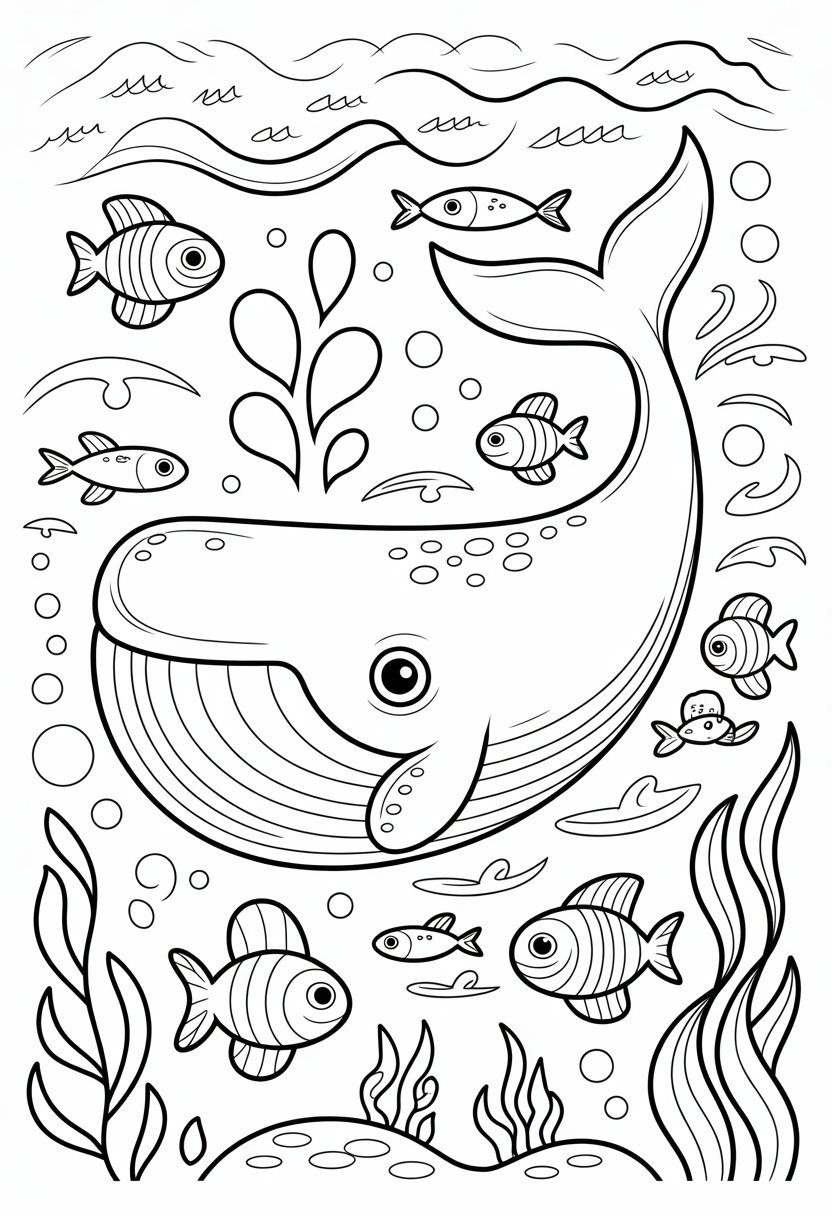
The gray whale ocean scene coloring pages show the whale swimming in its natural habitat. It often includes ocean waves, sea plants, and sometimes other marine animals.
These pages highlight the gray whale’s long migrations. Kids can color the whale gliding through cool ocean waters.
The designs are simple but capture the whale’s unique shape and features. They offer a calm and peaceful ocean setting for coloring.
6) Beluga Whale Coloring Page
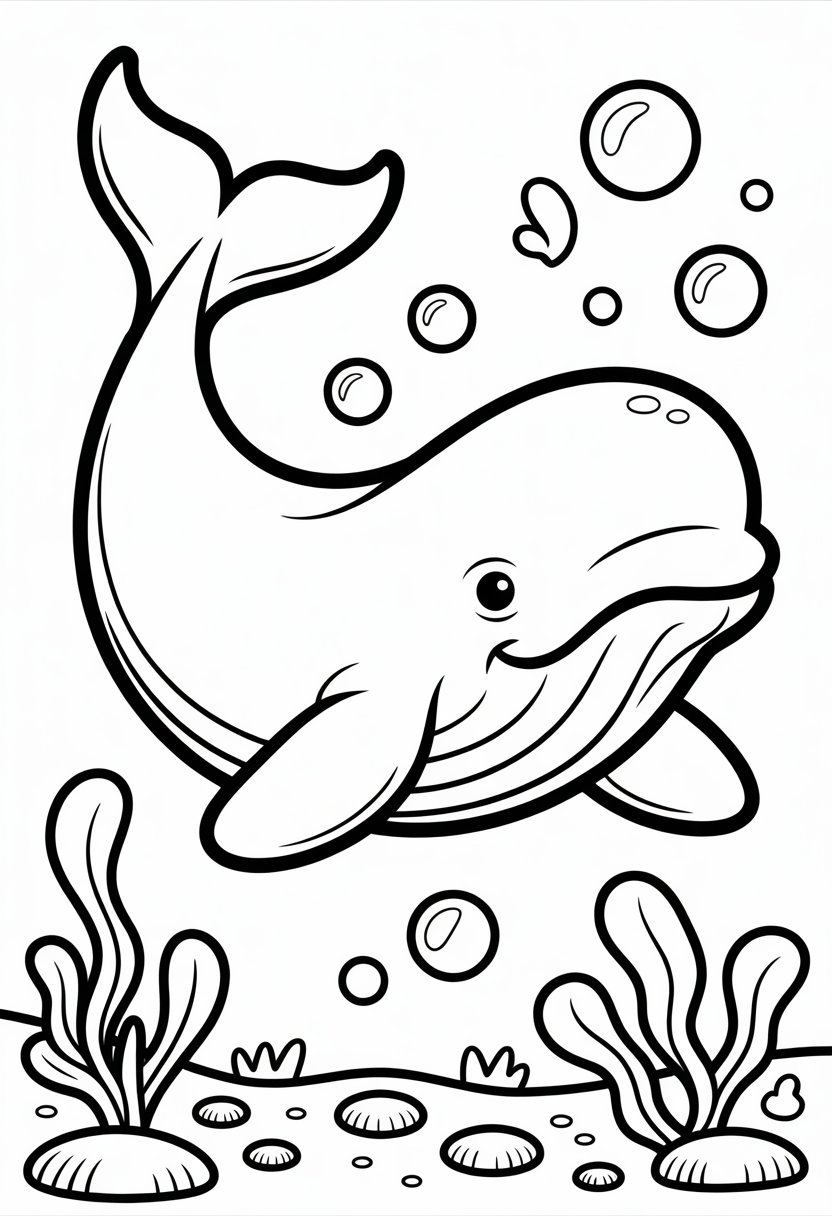
Beluga whale coloring pages show the whale’s unique white color. They often feature simple shapes that are easy for kids to fill in.
These pages can teach children about Arctic animals. They also help with creativity and motor skills through coloring.
These pages suit all ages and skill levels.
7) Bowhead Whale Detailed Drawing
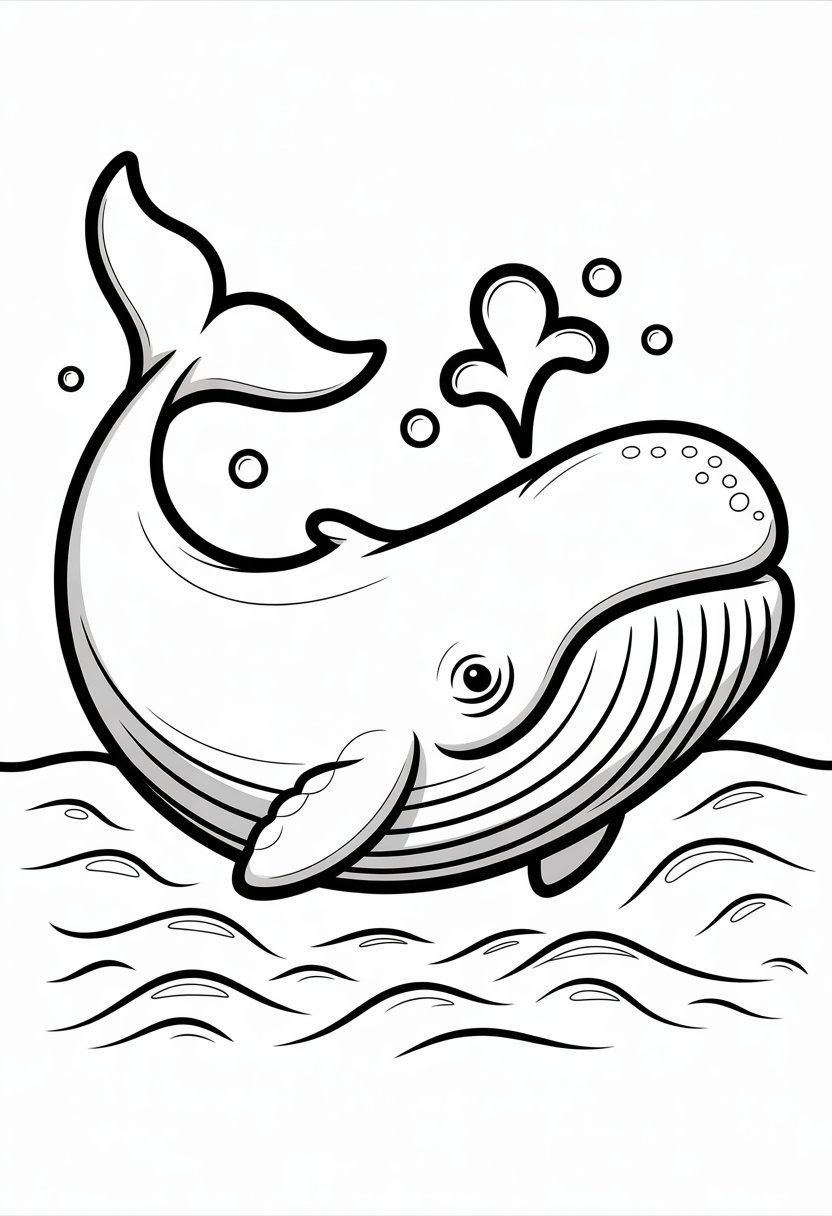
The bowhead whale is known for its thick body and lack of a dorsal fin. It lives mainly in Arctic and sub-Arctic waters.
A detailed drawing shows its large, curved mouth and strong, thick neck. These features help it survive in icy environments.
Such drawings help learners see the whale’s unique traits. They also make coloring pages more accurate and educational.
8) Narwhal Coloring Page
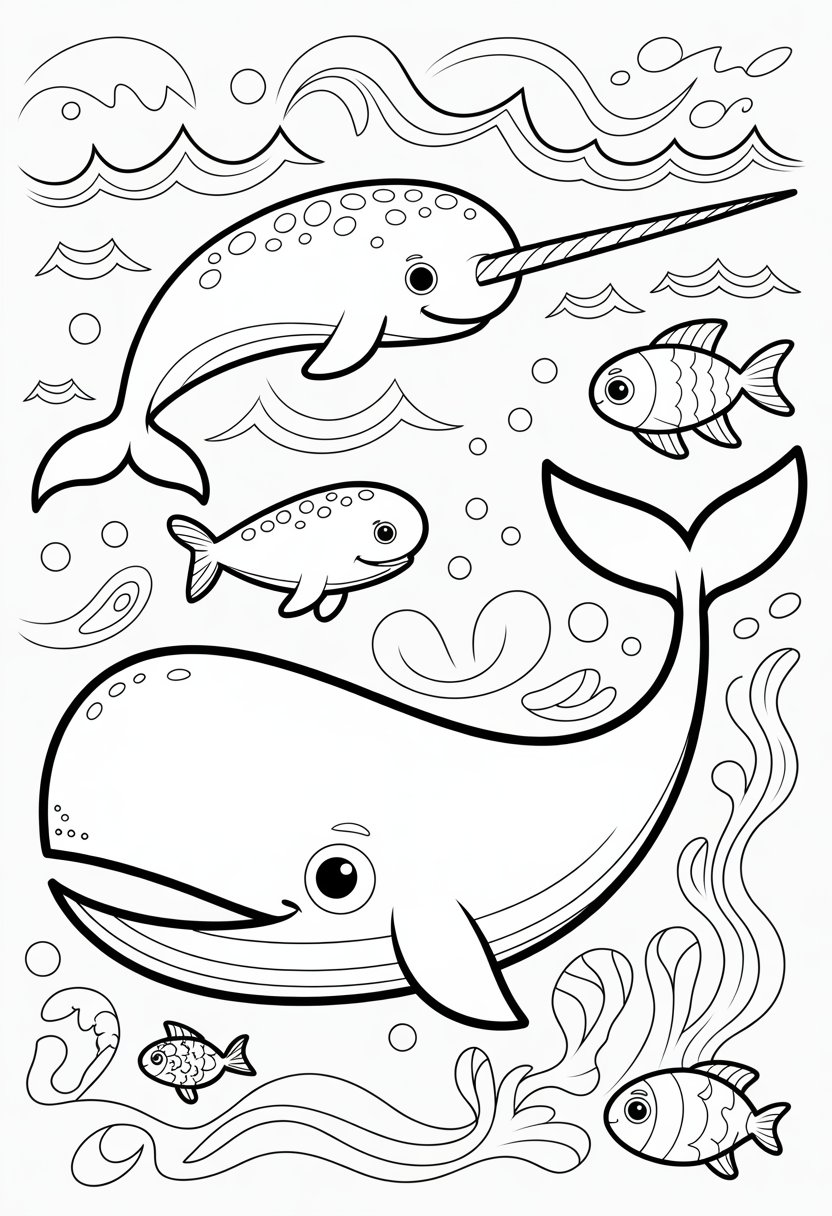
Narwhals are Arctic whales known for their long, spiral tusks. They are often called the “unicorns of the sea.”
This makes them easy for kids to color.
These pages are available for free and printable in many styles. They help children learn about narwhals while having fun.
Colors can be realistic or imaginative. Kids can use crayons, markers, or colored pencils to create their own versions.
9) Right Whale Silhouette Coloring
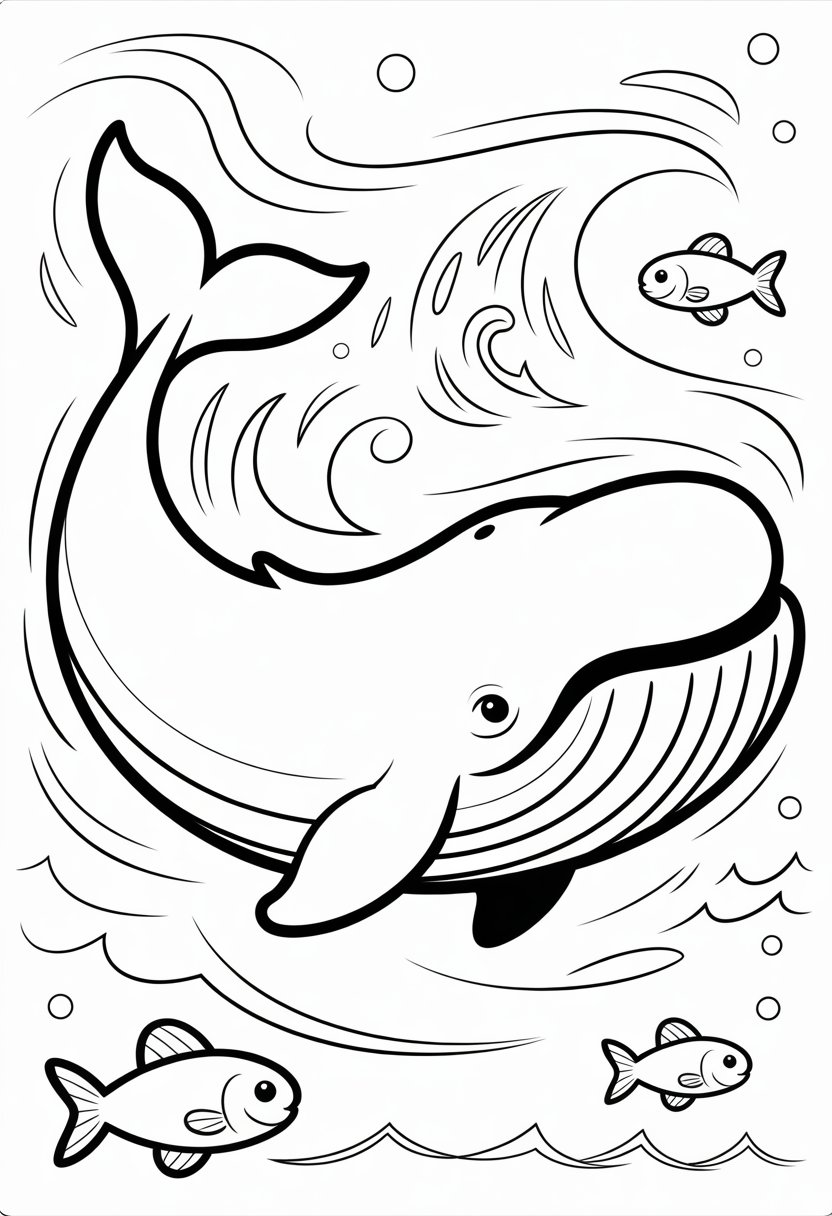
Right whale silhouette coloring pages show the whale as a dark shape against a light background. These pages focus on the whale’s unique body shape, highlighting its large size and rounded head.
The simple designs are good for all ages. They help people learn to recognize right whales by their outline alone.
These coloring pages often come in black and white. This style makes it easy to add details or patterns inside the whale’s shape.
10) Minke Whale Cartoon Style
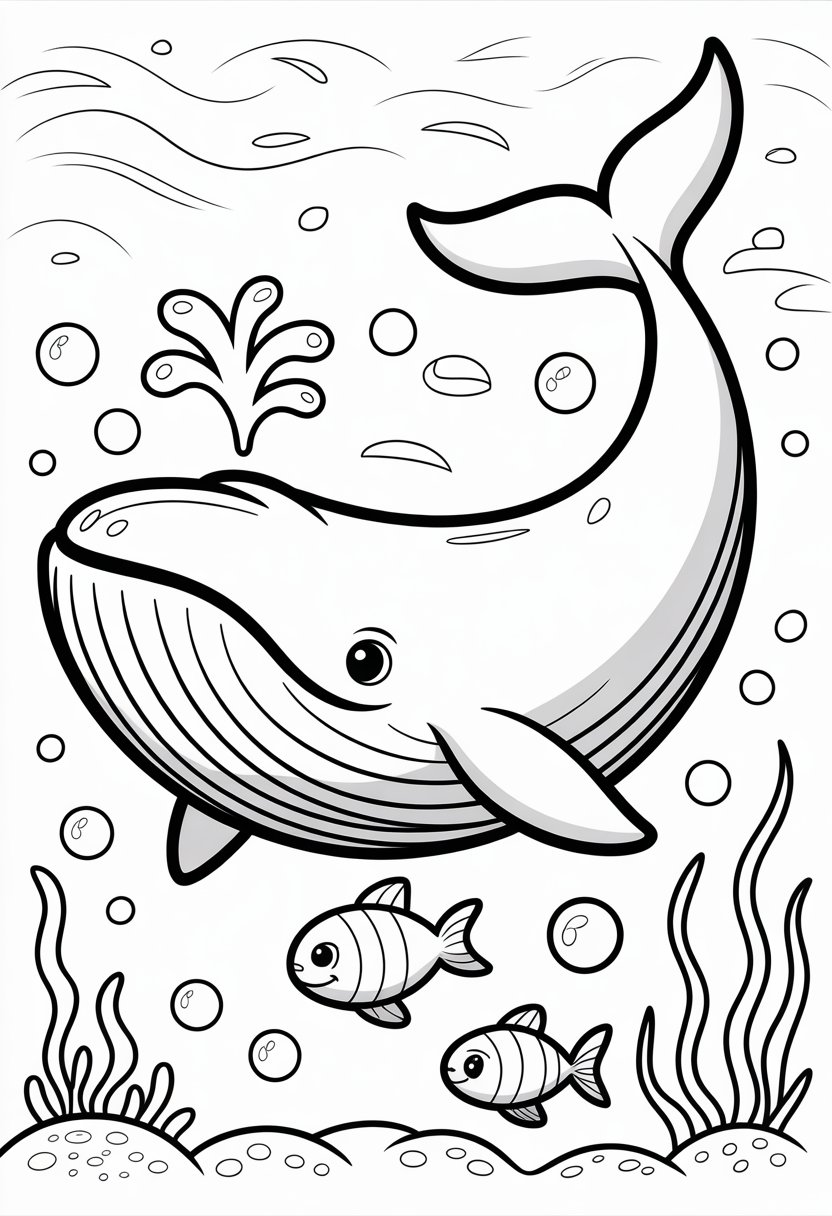
Minke whale cartoon coloring pages show simplified, friendly versions of this whale. They often have smooth lines and clear shapes.
These pages are good for children. They make coloring easier and fun.
Cartoon style helps highlight the whale’s key features. Like its small size and curved dorsal fin.
These images allow creative use of colors. Kids can choose bright or realistic shades.
They also help teach about minke whales in a fun way. The designs are easy to recognize.
Benefits of Whale Coloring Pages
Whale coloring pages offer more than just a fun activity. They help develop key skills and provide important learning opportunities. Coloring whales also supports mental well-being and gives people of all ages a chance to relax.
Enhancing Creativity
Whale coloring pages give children and adults space to use their imagination. They can choose colors freely, mix shades, and create unique designs. This artistic freedom helps develop problem-solving skills and boosts creativity.
These pages often include a variety of whale species, from simple outlines for beginners to detailed drawings for more advanced colorists. This variety encourages experimentation with different styles and techniques.
Using different tools like crayons, markers, or colored pencils adds to the creative experience. The process of selecting colors and filling in spaces strengthens fine motor skills and hand-eye coordination.
Educational Value
Coloring pages featuring whales teach users about ocean life and whale species. Images often highlight key traits such as the baleen plates in some whales or the sharp teeth in others. This helps children learn about animal biology in a hands-on way.
These pages can also include facts about whale habitats, diets, and behaviors. By engaging with these details, users build a deeper understanding of marine ecosystems.
Teachers and parents often use whale coloring pages to support lessons in science or environmental studies. They introduce topics like ocean conservation and the role whales play in the ecosystem, making learning visual and interactive.
Stress Relief for All Ages
Coloring whales has calming effects that reduce stress. Focusing on coloring helps users take a break from worries and distractions. This mindful activity improves concentration and promotes relaxation.
Adults and children alike can benefit from the soothing nature of coloring. Spending time on a quiet task like this can lower anxiety and create a feeling of accomplishment.
Whale coloring pages, with their natural themes and flowing lines, provide a gentle way to focus the mind. This makes them a useful tool for managing stress and improving emotional well-being.
Tips for Making the Most of Whale Coloring Pages
These steps help make painting whales both fun and informative.
Choosing the Right Materials
Using quality materials affects the look and ease of coloring. Markers and crayons work well for bold colors, while colored pencils are good for shading and detail. Watercolors require thicker paper to prevent warping.
For younger children, non-toxic crayons or washable markers are best. Older kids and adults might prefer fine-tipped pens for intricate designs. Having a variety of blues, grays, and even unconventional colors, like purple or green, can encourage creativity.
This helps avoid smudges and lets color choices be clearer.
Incorporating Marine Life Facts
Adding facts about whales during coloring increases learning. For example, naming species like humpback, blue, or orca whales makes it easy to discuss differences in size and shape.
Children can learn about whale habitats, such as oceans around the world, and their diets, including krill or small fish. Teachers or parents can ask simple questions to keep kids engaged.
Discussing ocean conservation alongside coloring pages helps raise awareness about protecting these animals and their environment.
Creative Display Ideas
Displaying finished whale coloring pages can boost pride and encourage more art. Using a bulletin board or wall space in a child’s room shows off their work.
Laminate pages to turn them into placemats or bookmarks. This makes the art both decorative and useful.
Digital photos of colored pages can be shared with family members or used to create a slideshow. Displaying artwork keeps motivation high and builds interest in whales and ocean life.


